I have always liked the idea of the old field reporter.
Not the glamorous version exactly. More the slightly rumpled one. The person walking around with a notebook, a tape recorder, a camera, and just enough unreasonable confidence to believe that the world might say something if you bothered to listen. A cigarette in the movie version, probably. A terrible cup of coffee. A shoulder bag with too many pens. The faint possibility of a deadline.
This is not, to be clear, my official biography.
I was briefly on my high-school newspaper, so obviously I possess extensive journalistic credentials, but nobody is confusing me with a trench-coated newsroom legend. I am a guy who drove to Richmond on an overcast Saturday, walked into a crowded park, took a bunch of pictures, talked into his phone, and tried to notice what the day was handing me.
Still, for an afternoon, it felt close enough.
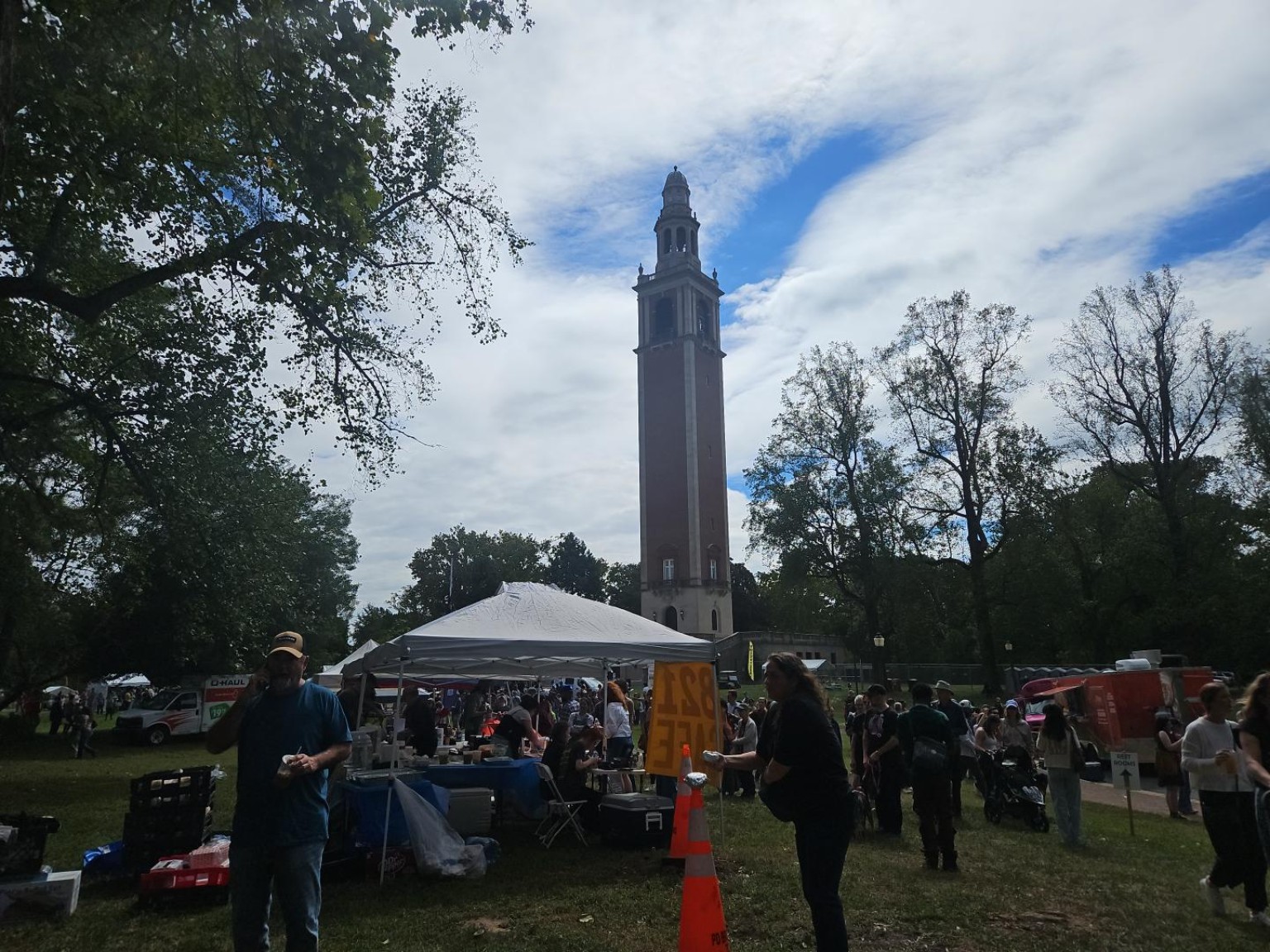
The Park As A Desk
The scene was Richmond VegFest in Byrd Park, but the event is not really the point of this field note. It was the setting, the weather system, the excuse to leave the house. The useful part was what happened once I was inside it.
There was the Carillon, tall and brick and old enough to make the whole place feel like it had been waiting there before anyone decided to put tents around it. There were booths, food trucks, dogs, signs, people with tote bags, people with pamphlets, people explaining their exact relationship to veganism with the careful diplomacy of a minor treaty negotiation.
Vegetarian. Plant-based. Mostly vegan. Not vegan, but trying. Vegan except when visiting family. Vegetarian with cheese complications, a category I know intimately because good cheese continues to be one of humanity's more persuasive arguments against moral consistency.
But again, that was not really what I was writing about.
What interested me was the act of moving through it. The reporter feeling. The way a public place gives you threads if you stop treating it like content and start treating it like weather.
The Notebook With A Camera Attached
The romantic image is still the 1980s reporter: notebook in one hand, little tape recorder in the other, camera hanging somewhere near the ribs. That whole posture says: I do not know yet what matters, so I am going to collect enough of the day to find out later.
That is a beautiful idea. It also happens to be a very practical one.
Most of us now carry a better field kit than that reporter did. The phone is a camera, recorder, notebook, map, clipping file, and research assistant. The technology is impressive, but the technology is not the soul of it. The soul is the permission to notice.
To take the photo because something tugged at you.
To say the thought before it dissolves.
To record the little human detail that is not grand enough to become a thesis yet, but might become a doorway.
The world is full of small assignments. Nobody gives them to you. You recognize them.
A Temporary Third Place
What I liked about the festival was not that everyone agreed on one perfect label. People rarely do. What I liked was being around people who clearly cared about something.
That is underrated.
There is an energy in a place where people have come out because they are curious, committed, hungry, idealistic, opinionated, or simply looking for a decent lunch without having to interrogate the menu like a legal document. It becomes a temporary third place: not home, not work, not quite a club, but a public room where people have decided to gather around a shared atmosphere.
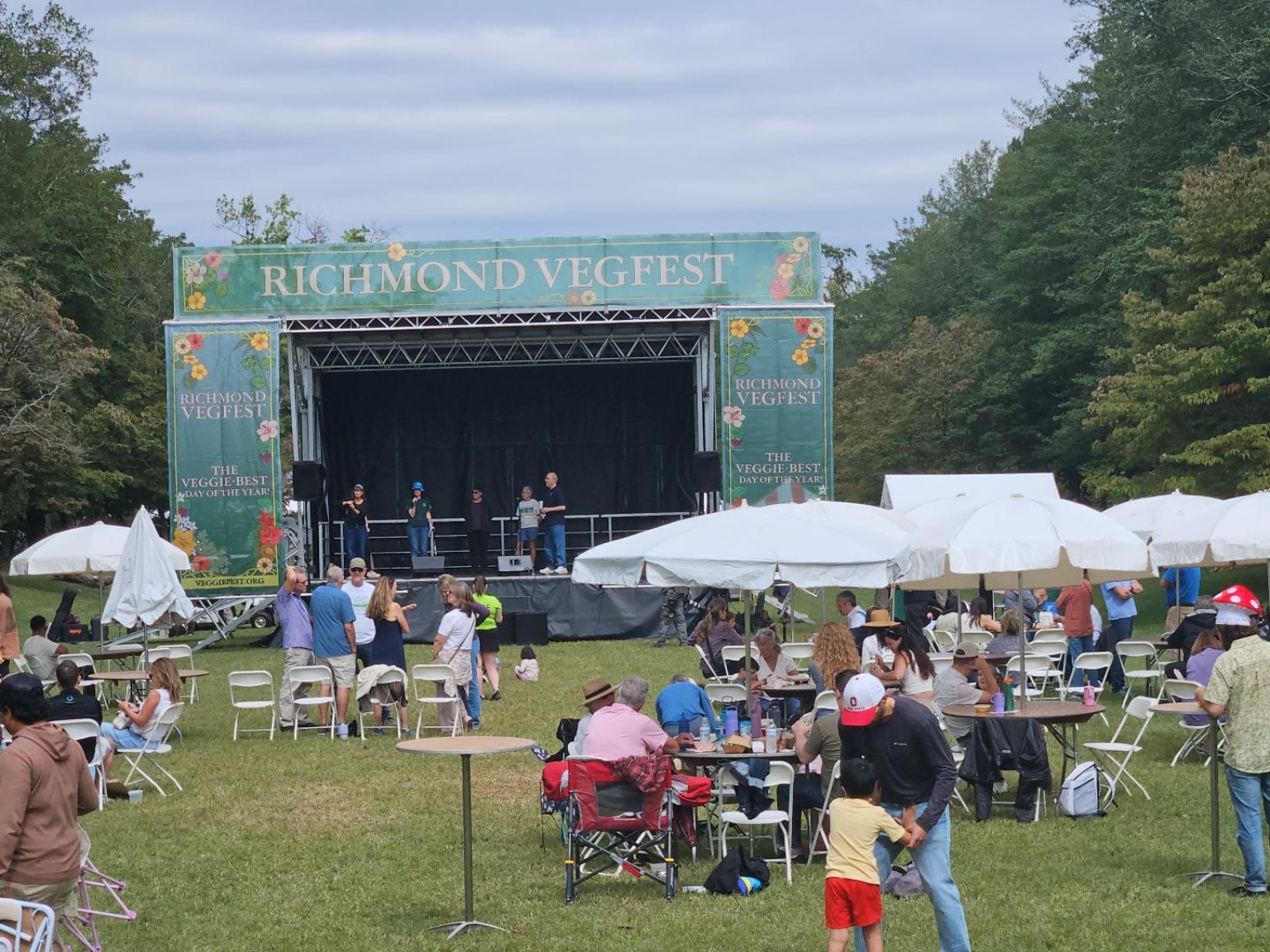
I do not want to oversell it. This was still a busy outdoor festival. There were lines. There were bottlenecks. There was the ordinary choreography of people stopping in exactly the place everyone else needs to walk through. Humanity remains undefeated in this department.
But even the crowd mattered. A sparse event can make you feel like you showed up to a rumor. A busy one has proof in it. People are here. Something is alive enough to make parking annoying.
There are worse compliments.
The London Thread
At one point the park reminded me of running a half marathon in London years ago.
I am not making an architectural claim here. This is not the part where I pretend to know the full lineage of park design and confidently connect Richmond to England over a folding table of vegan donuts. It was simply the way older public space can do that. Mature trees. Open lawn. Brick. Gray sky. A certain civic mood.
The weather helped. It was overcast, which immediately made my brain wander toward Prince and the line about how "overcast days" were not exactly his favorite romantic condition. That is how attention works for me: park to London, sky to song, song to memory, memory back to the path in front of me.
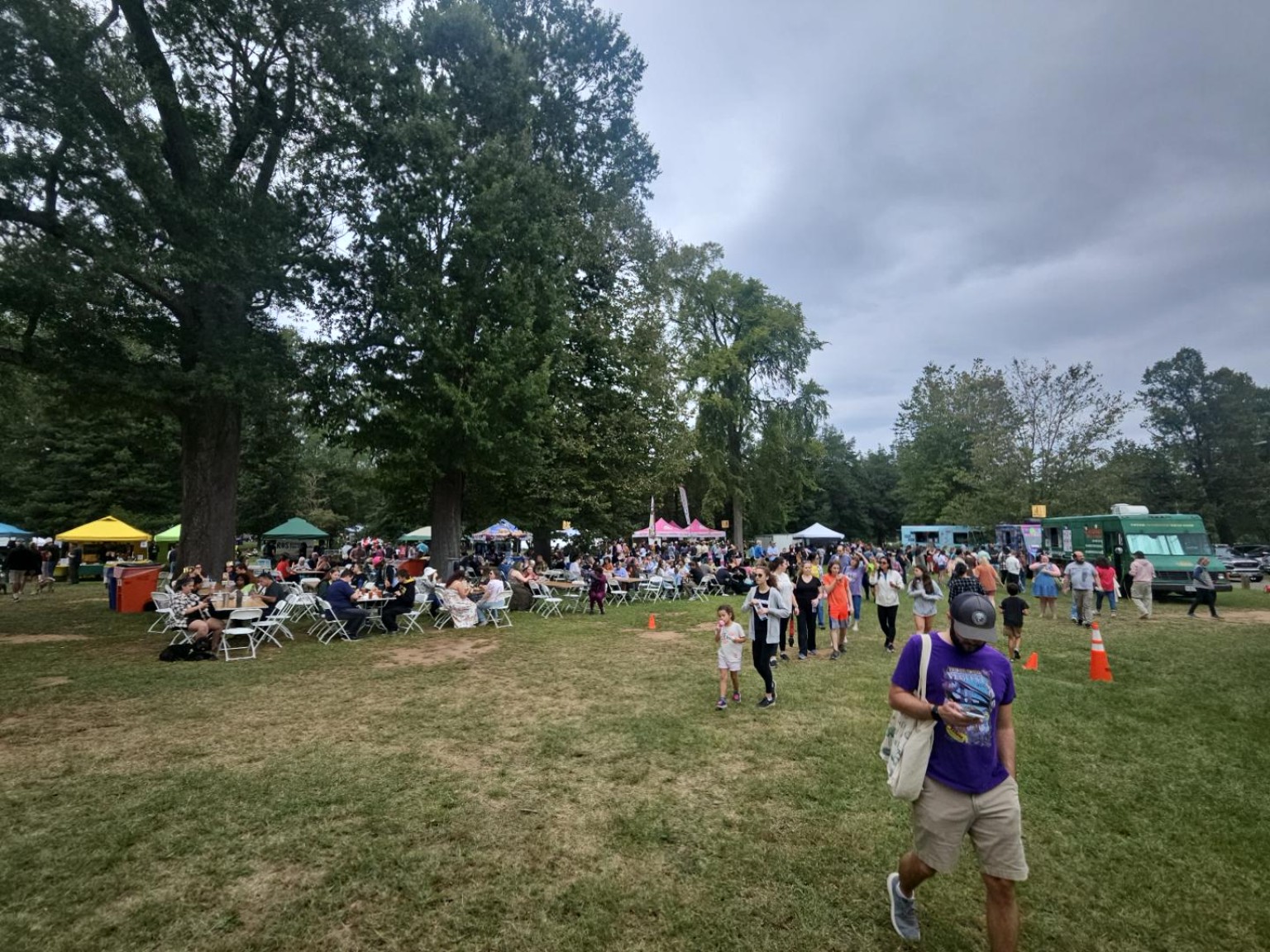
This is why wandering is useful. Not because every association is profound. Most are not. But enough of them are alive. Enough of them connect to something else. Enough of them remind you that the mind is not a search box. It is more like a city with alleys.
You walk one block and find another block waiting.
The Gorge Fest That Wasn't
I would love to say the lunch plan was strategic and premeditated, but it was mostly my normal operating procedure: arrive hungry, imagine a gorge fest, let reality gently intervene.
I ordered from the place with food I wanted and, just as importantly, a line that was not an act of spiritual endurance. I had big plans. Multiple stands were involved in the fantasy. Then I sat down, ate a little, and my stomach filed an internal memo explaining that we were not doing that today.
So I had lunch. And also dinner.
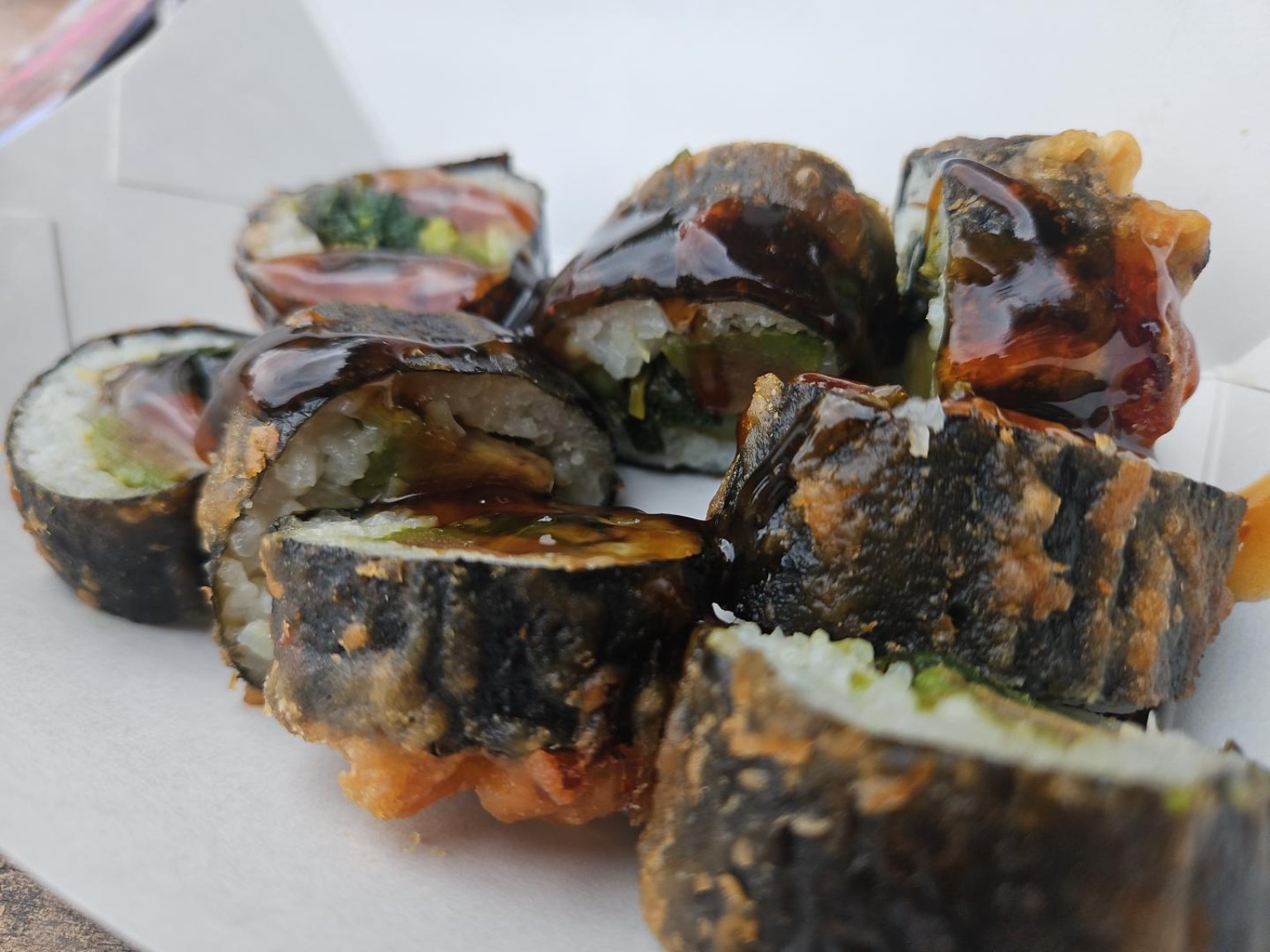
This is the kind of note I like because it is not trying to be important. It is just true. A whole day can become abstract if you let it. Community, identity, third places, field reporting, modern notebooks, the romance of observation. Fine. Yes. All of that.
But also: I thought I was going to eat like a victorious buffet champion and instead became a man with leftovers.
The small stuff keeps the essay honest.
Micro-Worlds Inside The Bigger World
One of my favorite kinds of public events is the kind where you realize the main subject is only the wrapper.
Inside the wrapper are micro-worlds. Strength culture at one booth. Animal sanctuary work at another. Travel. Conservation. Affordability. Mushrooms. Books. Local clubs. Food trucks. People explaining, selling, inviting, educating, sampling, persuading, and standing under tents with the seriousness of people who have decided their corner of the world deserves a table.
The mushroom booth had that feeling. A small specialized universe inside a larger crowd. Baskets, signs, varieties, prices, all of it quietly saying: there is more here than you know.
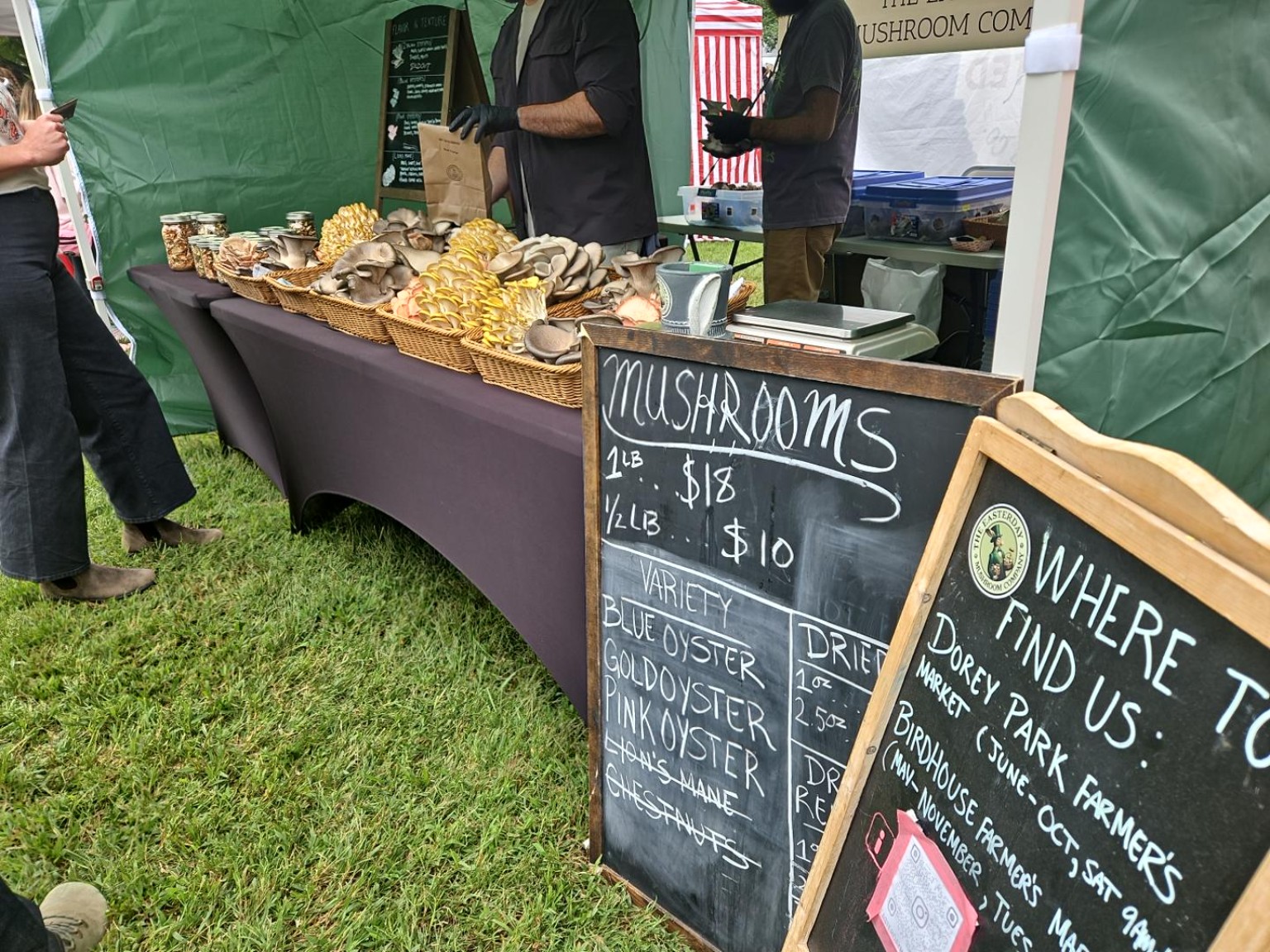
That is the reporter lesson again. Do not only look for the headline. Look for the table inside the tent. Look for the sign. Look for the object that does not explain itself immediately. Look for the person who clearly knows a lot about one thing.
Curiosity is usually rewarded, but not always on the first pass.
We Choose The Room
I have been thinking lately about why certain communities pull me in. Running did this for me years ago. Vegetarianism did it later. The easy public version is health, ethics, discipline, food, identity, all the respectable nouns.
Those are real.
But there is another truth under it: sometimes we do not only choose a habit. We choose the room we want to be in.
We move toward people who seem interesting to us. People who read. People who care. People who are trying something. People whose energy suggests a version of ourselves we might like to become, or at least stand near for a while and see what happens.
That is not always noble. It is also not automatically shallow. It is human.
You go where the atmosphere teaches you something.
Go File Something
By the time I left, I did not have an event recap. I had a pocketful of fragments.
The Carillon. The crowd. The stage lawn. The lunch that became dinner. The mushroom booth. The overheard label negotiations. The old reporter fantasy. The London memory. The weather. The feeling of being in a place where a lot of people had decided to care out loud.
That is enough.
Not every field note needs to arrive with a thesis. Sometimes the work is to walk around and collect enough honest pieces that a shape can emerge. The old reporter took notes because something might matter later. The modern version can do the same thing with a phone and a little less cigarette smoke.
The trick is not to confuse the device with the disposition.
The disposition is attention.
The disposition is leaving the house.
The disposition is letting the world make the first move, then being awake enough to answer.
So yes, maybe this was a festival. Maybe it was a field session. Maybe it was an excuse to play journalist for an afternoon with the full authority of my high-school newspaper past.
Either way, I came home with something.
Now it's time to go get me some coffee. Oat milk and stevia. And maybe this time I'll have a blueberry muffin.